Blue Ocean Waves (Seigaiha)
Meaning
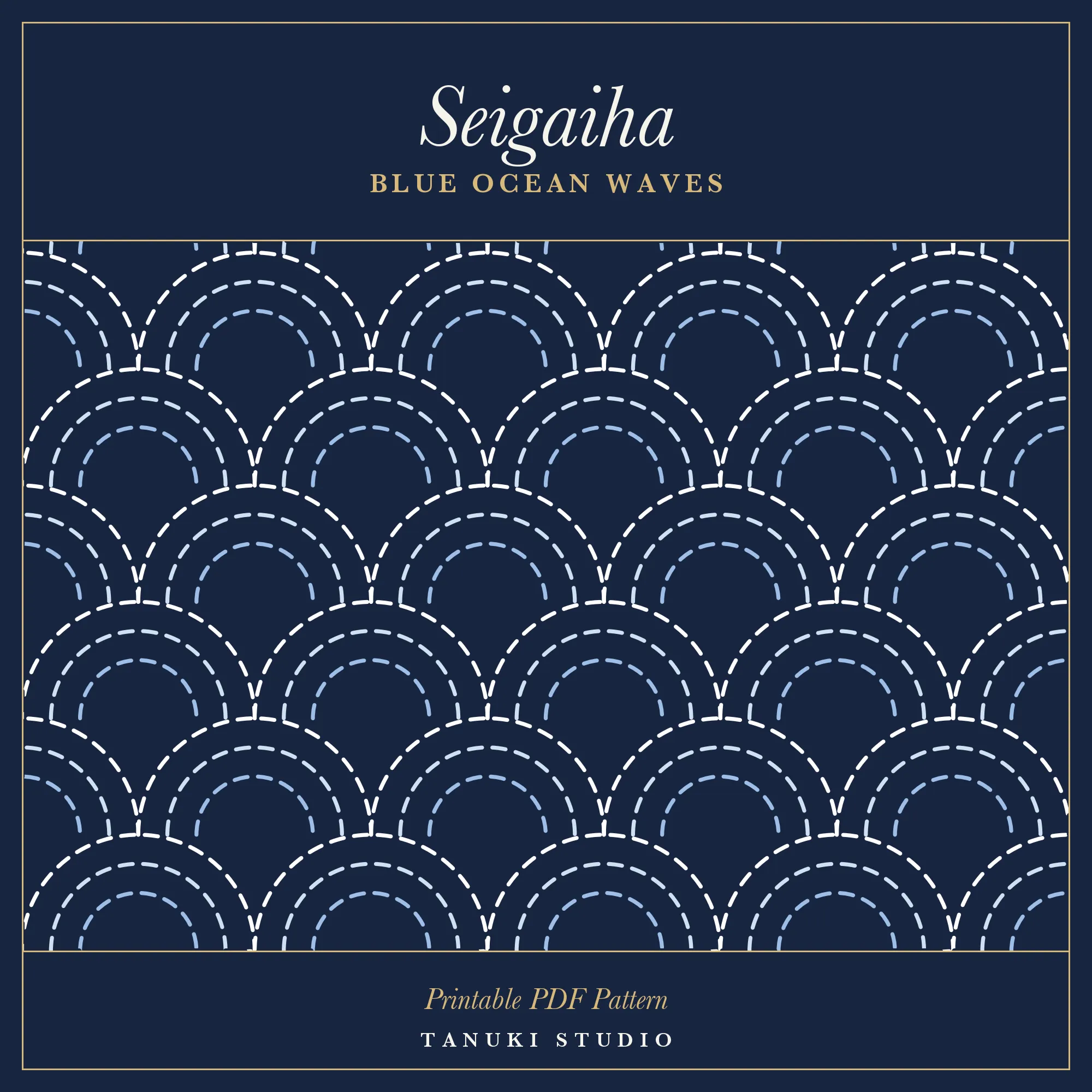
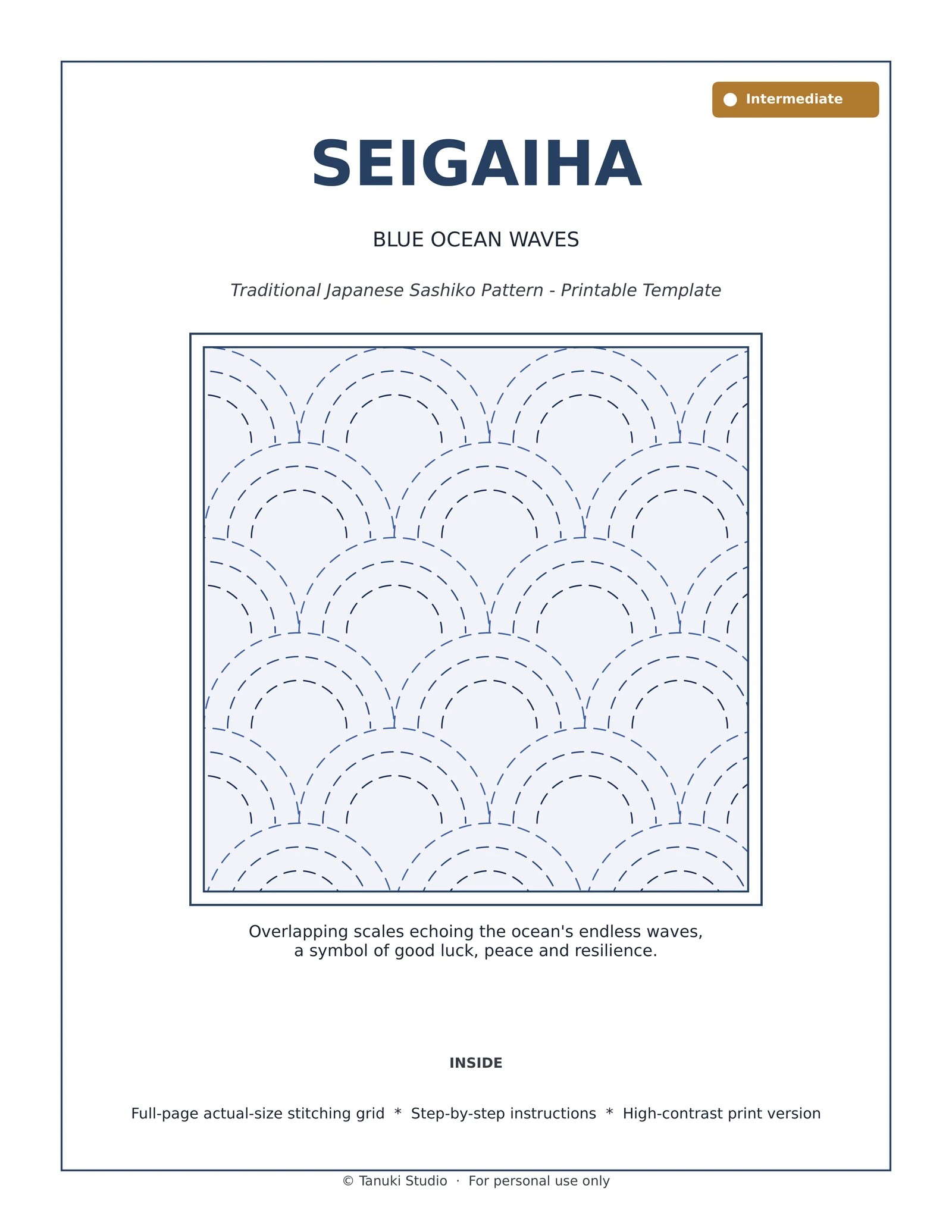
Seigaiha translates literally as "blue ocean waves," from sei (blue or blue-green), gai (sea), and ha (wave). The design belongs to a recognized category of Japanese motifs called kisshōmonyō, "auspicious patterns," and its evenly spaced, gently overlapping arcs read as calm, steady swells rather than crashing surf. Because the waves repeat without any visible end, the pattern is understood to carry wishes for lasting peace, prosperity, and continuity, which is part of why it has long been a favorite for weddings and other celebratory occasions.
History
The motif's earliest known appearances in Japan are on pottery, haniwa funerary figures, and old maps, where it was used to mark the sea, dating to around the Asuka period (6th to 7th century). Some sources trace its deeper roots to Chinese cosmographical wave designs and, beyond that, to Sassanid Persia by way of the Silk Road. I keep that longer chain as a commonly repeated account, since I have not verified it against a primary or academic source.
The Japanese name has a specific and better-documented origin: a Heian-period (794 to 1185) court dance called Seigaiha, part of the gagaku tradition, in which performers wore robes embroidered with the wave pattern. The dance appears in The Tale of Genji. From the dance costume, the motif moved into wider use, textiles from around the Nara period (710 to 794) onward, and later became closely associated with Edo-period (1603 to 1868) lacquerware and ceramics, by which point it had spread from aristocratic use into everyday goods.
Stitching notes
Seigaiha is a rhythm pattern. Once the arcs are marked, the stitching is mostly repetition, with enough layering to stay absorbing. Work layer by layer: stitch every outer arc first, then move to the middle and inner arcs.
The outer arcs share their low points, so they read as one continuous wave. The smaller arcs are separate curves, which means the thread travels across the back between scales. Keep those carries relaxed enough that the cloth stays flat.
Seigaiha sits a notch past beginner mostly because of the layering and color changes. Each layer can take its own shade, palest at the crest and deepest toward the center. A single color works too, but the three blues give the finished piece its stacked, oceanic depth.
Ways to use it
A table runner or placemats
A horizontal run of waves suits the long, narrow shape of table linens, and the layered blues read as water at a glance, an easy, literal fit for the motif.
A zippered pouch or notebook cover
The pattern scales down cleanly, so a single block of two or three rows fills a small panel without overwhelming it.
A framed wave panel
Three graduated blues stitched on a rectangle of linen, hooped or framed, stand on their own as small textile art, no sewing into a larger project required.
A cushion front
Worked at full scale across a panel, the repeating arcs fill the surface with steady, rolling movement, well suited to a reading nook or a coastal-toned room.
For this pattern: Because the layering is the visual point of the design, three graduated shades of blue thread (light at the crest, deepening toward the center) show it off best; a single color still works and is simpler to manage, but it loses the stacked-depth effect that sets seigaiha apart from a flatter wave motif.
Get the full pattern on Payhip
Additional sizes, an extended stitch guide, and a grid-spacing reference sheet.
Buy on Payhip → (opens Payhip in a new tab)Secure checkout via Payhip. Pay by card or PayPal.
Three free patterns, plus 15% off
Jūjizashi, Dan Tsunagi, and Komezashi, with a plain how-to for all three.