What kogin is
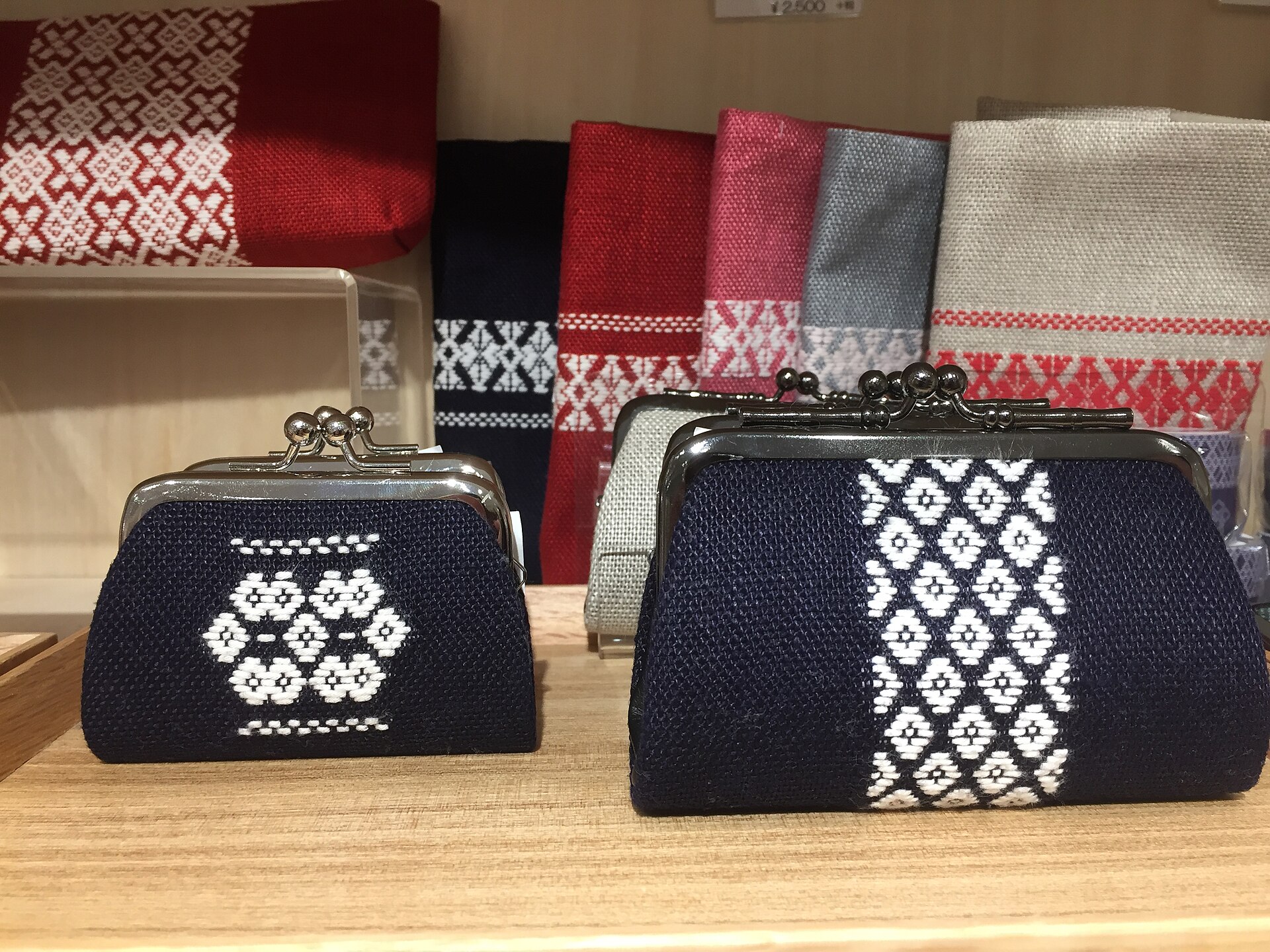
Kogin — or kogin-zashi — is a counted-thread form of sashiko, recognized by its white cotton diamond patterns worked on indigo-dyed cloth. It’s usually treated as a tradition of its own, distinct from moyozashi and hitomezashi, though it shares sashiko’s roots in reinforcing and warming everyday cloth.
Where it comes from
Kogin comes from the Tsugaru region of present-day Aomori Prefecture, in Japan’s far north, and took shape during the Edo period (1603–1868). In a time when commoners faced restrictions on using cotton, people there worked precious cotton thread into their hemp and linen cloth — making plain workwear warmer, more protective through hard northern winters, and stronger at once. For sashiko’s wider history, see A short history of sashiko.
How it’s worked
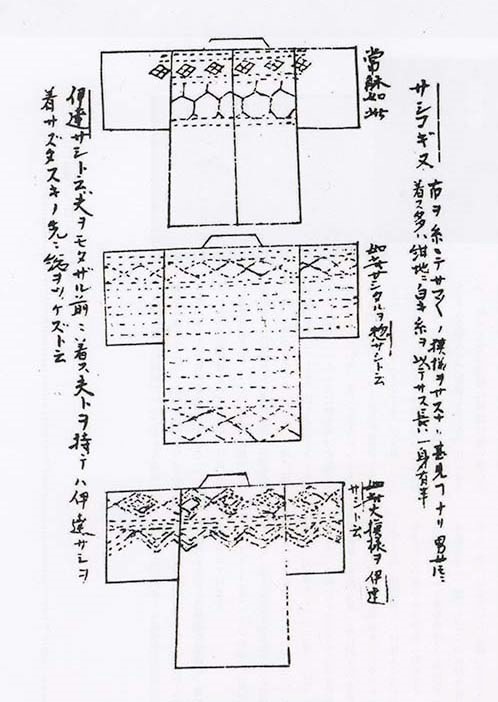
Kogin is a counted-thread technique: the stitches are counted over the threads of the cloth to build up small diamond-shaped units, which combine into larger geometric patterns. Traditionally it’s white cotton thread on indigo, and the counting is what gives kogin its crisp, mathematical diamonds.
Regional styles
Around the city of Hirosaki, three main regional styles are recognized:
- Nishi-kogin (to the west) — marked by horizontal shoulder stripes that added strength where garments carried loads.
- Higashi-kogin (to the east) — focused on diamond patterns, with few prominent stripes.
- Mishima-kogin (to the north) — smaller patterns, a result of scarcer materials, with moderate horizontal striping.
How it differs from moyozashi and hitomezashi
Where moyozashi draws flowing lines of running stitch, and hitomezashi builds its pattern from single stitches on a square grid, kogin is counted over the weave of the cloth to form its signature diamonds — and it belongs specifically to the Tsugaru north.
Where you’ll see it
Historically, kogin covered the shoulders and bodies of work garments in the cold north. Today its diamond patterns are stitched decoratively on cloth and clothing. You’ll find more sashiko to try in the pattern library.