Wickerwork (Ajiro)
Meaning
Ajiro means "in place of a net." The name first belongs to a real fish trap: a woven weir of bamboo or brushwood set into a riverbed to guide and catch fish.
As a pattern, ajiro is often read through that net image, as a wish to catch good fortune or keep harm away. It can also be read more simply as woven unity: many strips crossing into one strong surface.
History
Ajiro begins as a craft technique before it becomes a textile motif. Bamboo and brushwood weirs appear in classical poetry, including a verse about ajiro stakes set in the Uji River at dawn. The diagonal weave later moved into architecture, including wickerwork-paneled ox-carts and sukiya-style tea house ceilings.
Its move into kimono ground-pattern use is usually described as an Edo-period-and-after development. Ajiro and Higaki are closely related names in Japanese pattern sources; here they are charted separately, with Ajiro as over-under ribbons and Higaki as a diagonal herringbone of planks.
Stitching notes
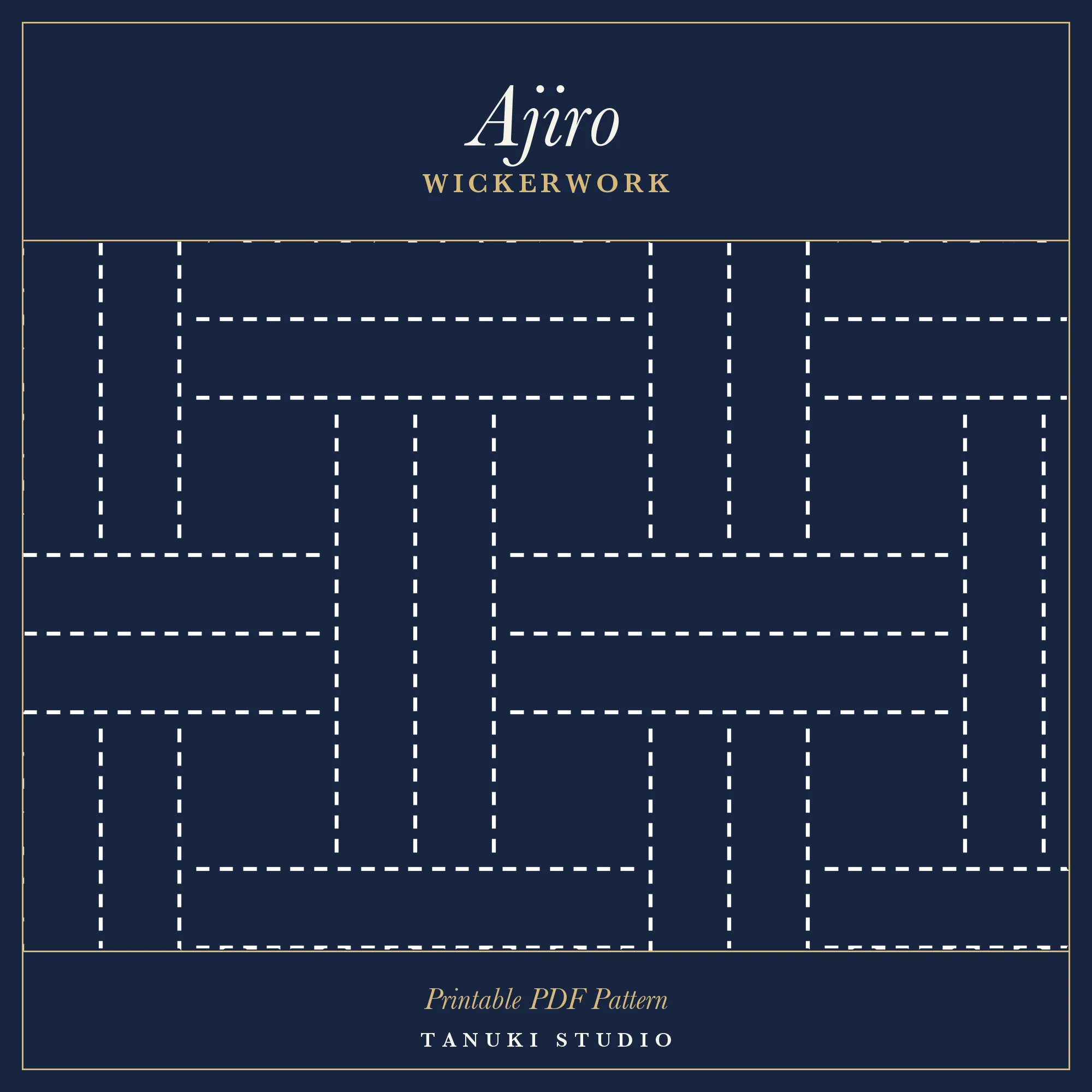
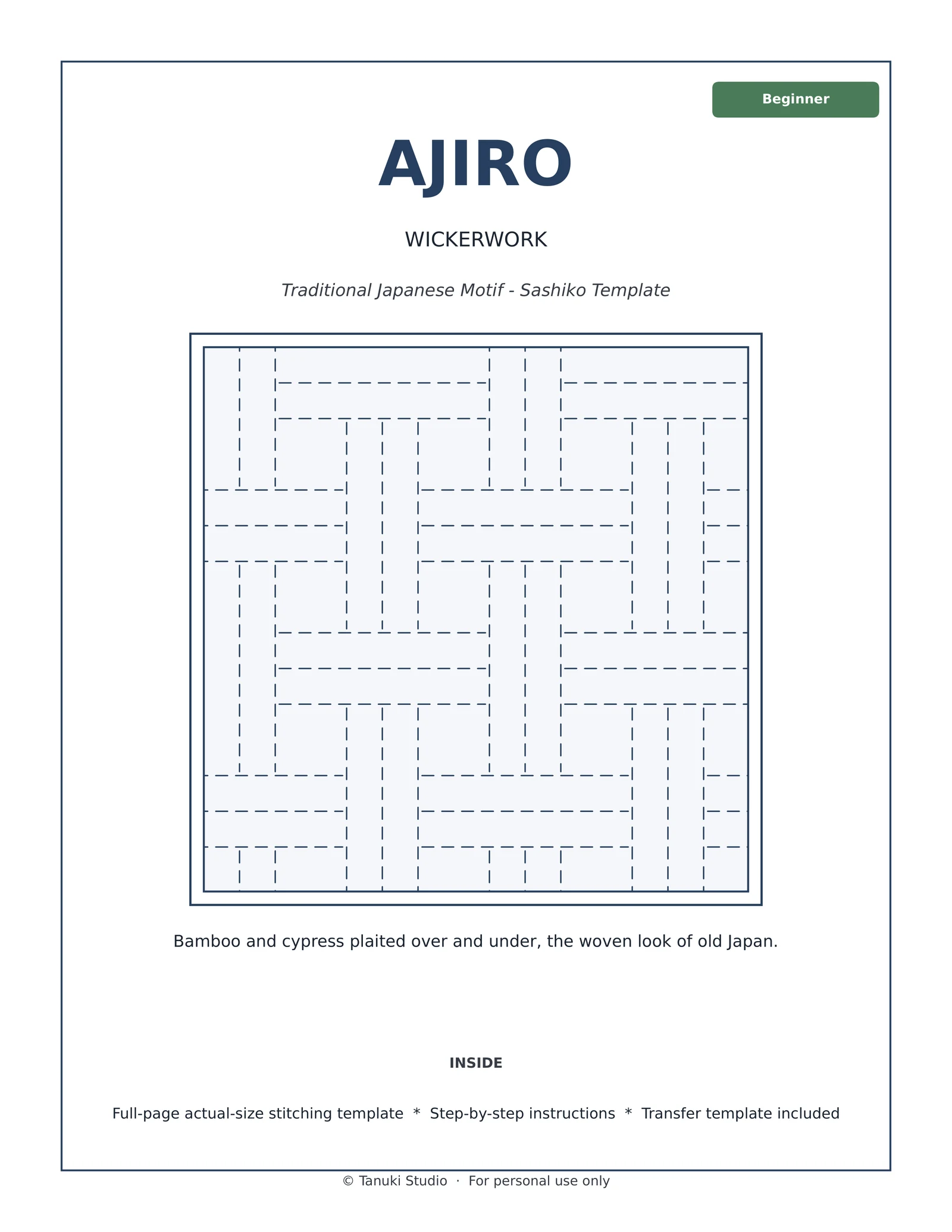
Ajiro is built from ribbon-like bands, three lines wide, laid out in a checkerboard. One block shows the vertical ribbons passing over; the next shows the horizontal ribbons passing over. A small open square sits where the ribbons cross, keeping the weave readable.
Like its fence-framed relative Higaki, it’s stitched as straight running-stitch lines worked in two passes, one direction then the other, with the thread carried loosely across the back wherever a marked line passes under a crossing ribbon. The plaited, over-and-under look comes entirely from where those lines run, not from any actual weaving.
It is quick even by beginner standards. The repeat is large, and each ribbon set spans a full three inches before the weave repeats.
Get the full pattern on Payhip
Additional sizes, an extended stitch guide, and a grid-spacing reference sheet.
Buy on Payhip → (opens Payhip in a new tab)Secure checkout via Payhip. Pay by card or PayPal.
Three free patterns, plus 15% off
Jūjizashi, Dan Tsunagi, and Komezashi, with a plain how-to for all three.