Morning Glory (Asagao)
Meaning
Asagao means "morning face," the flower that opens at dawn and closes again by afternoon. The motif is often read as a symbol of transience: beauty noticed because it does not last long.
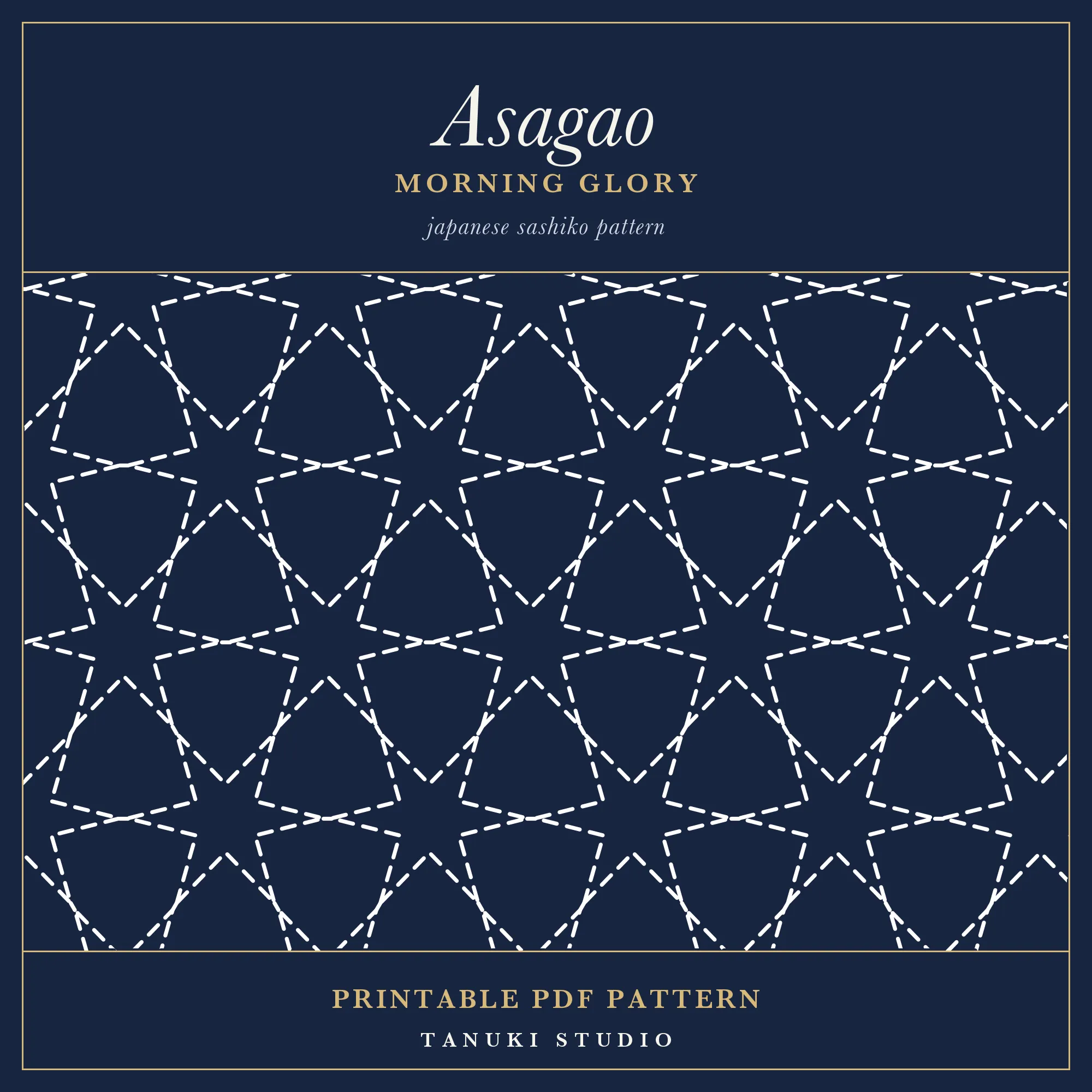
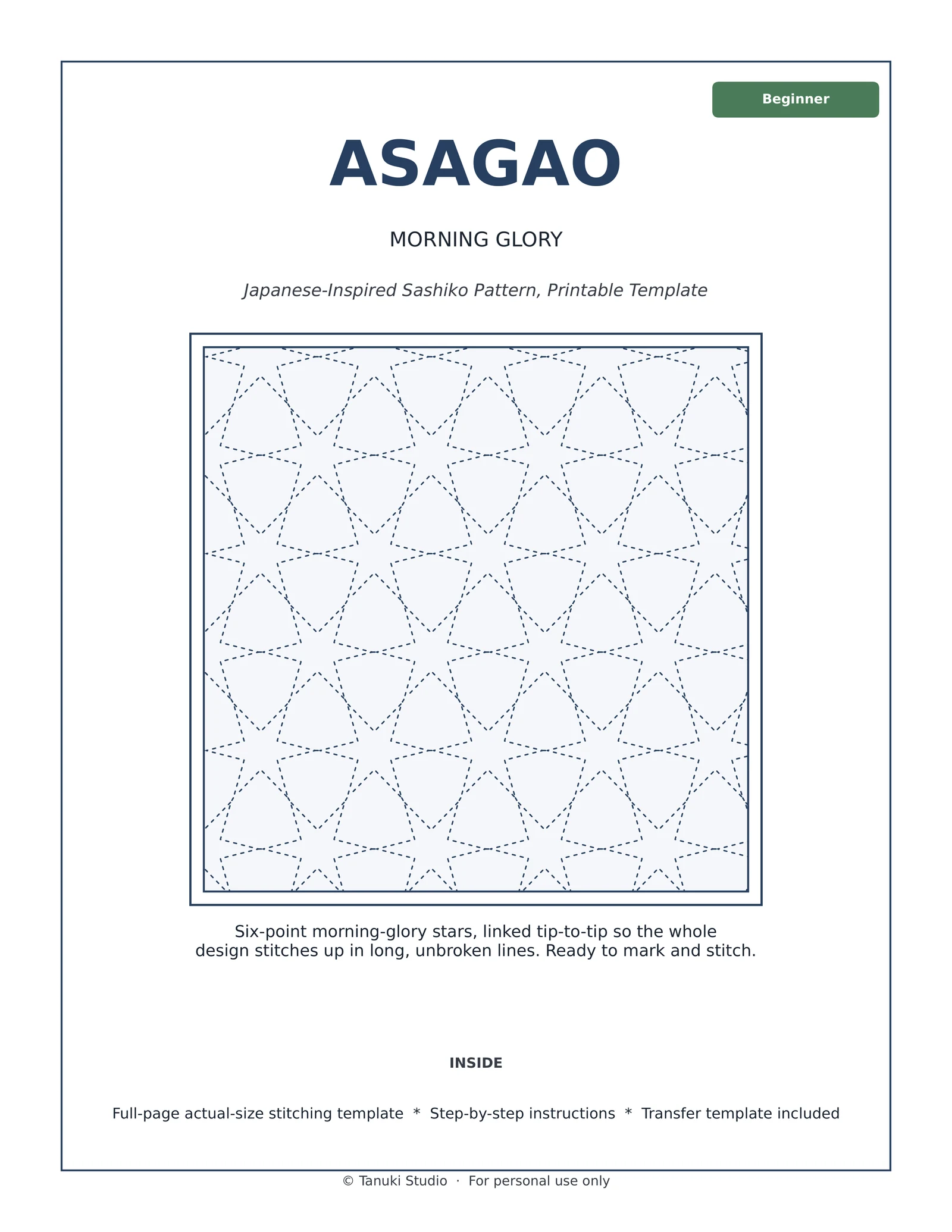
This chart treats the flower geometrically, as a six-point star set on a triangular grid. That is why it sits with the geometric patterns rather than the floral ones.
History
Asagao is generally documented as arriving in Japan from China during the Heian period for medicinal use. By the Edo period it had become a cultivation craze, appearing on combs, hand towels, fans, summer kimono, and yukata.
Its path into this exact geometric sashiko form is less clear. The six-point-star construction follows the discrete, tip-to-tip charts sold under this name by established sashiko sample brands, and it is different from kagome, the continuous woven lattice it can resemble at a glance.
Stitching notes
Asagao is marked on an equilateral triangular lattice, the same grid family used for Asanoha. Here, each six-point star sits at its own lattice point with open space between the blossoms.
You stitch it in three passes of long zigzag lines: one horizontal, then one for each diagonal. The zigzags run between the stars, never around them, and together they draw every star and link it to its neighbors.
It takes longer than the simple geometry suggests, because every zigzag needs to pass cleanly through shared points.
Get the full pattern on Payhip
Additional sizes, an extended stitch guide, and a grid-spacing reference sheet.
Buy on Payhip → (opens Payhip in a new tab)Secure checkout via Payhip. Pay by card or PayPal.
Three free patterns, plus 15% off
Jūjizashi, Dan Tsunagi, and Komezashi, with a plain how-to for all three.