Pinwheel (Kazaguruma)
Meaning
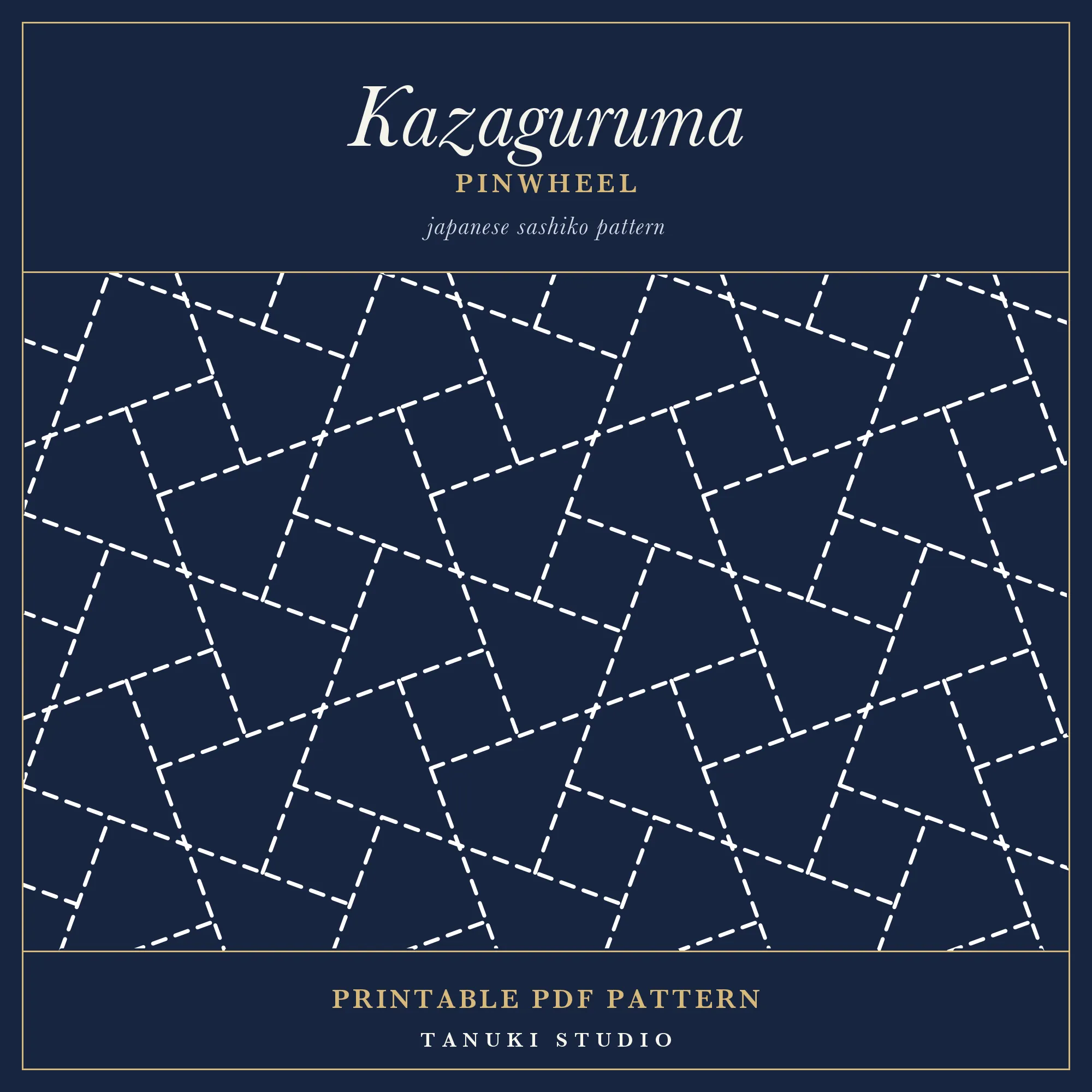
Kazaguruma means "wind wheel," the term Japanese uses for the spinning paper pinwheel toy and, separately, for a clematis species with a similar bloom. This pattern follows the toy reading: tilted squares set into a field of small spinning forms.
Toy pinwheels are sometimes left at Jizō statues as devotional objects, so the object carries a gentle association with care and remembrance. This chart keeps the lighter visual side of the pinwheel: motion, play, and turning wind.
History
The pinwheel toy's lineage traces back to Han-dynasty China and spread through East Asia from there. The motif also appears in twentieth-century Japanese printmaking, including Yoshida Hōdaka's 1963 woodblock print "Pinwheel (Kazaguruma)," now held by the Art Institute of Chicago.
This sashiko chart is a geometric construction in that spirit: two interlocking tilted-square sets, built for rotation and movement.
Stitching notes
Kazaguruma is built from two sets of tilted squares layered over each other. One tips twenty degrees one way; the other tips twenty degrees the opposite way and shifts by half a cell. Their edges interleave into a field of little spinning pinwheels.
It is stitched in four passes, each stepping along a row: stitch an even run, skip behind to the next, and repeat. There is no woven over-under to track, and where lines from the two sets cross, they simply cross. The main skill is keeping each square’s tilt and spacing consistent so the interleaving reads as one unified spin.
Get the full pattern on Payhip
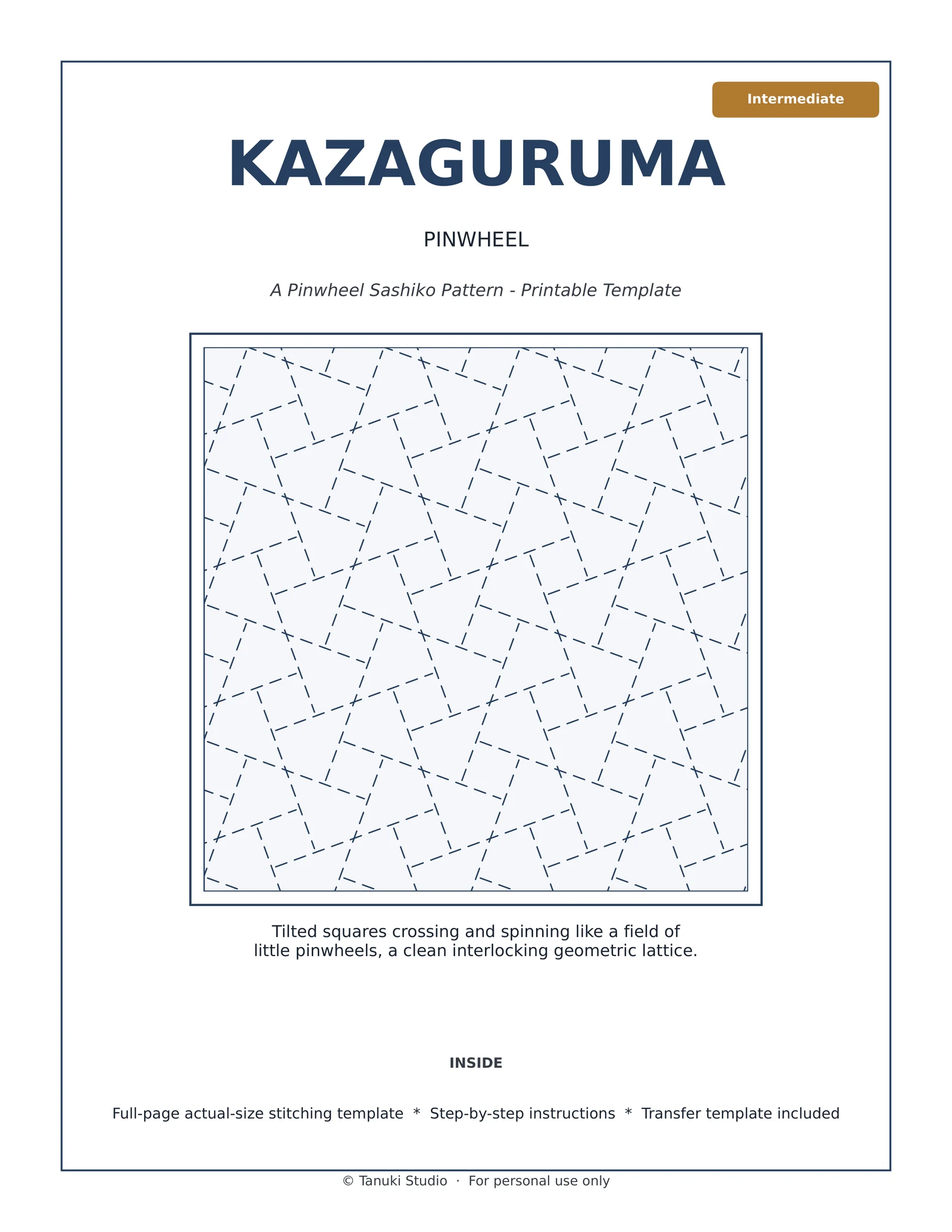
Additional sizes, an extended stitch guide, and a grid-spacing reference sheet.
Buy on Payhip → (opens Payhip in a new tab)Secure checkout via Payhip. Pay by card or PayPal.
Three free patterns, plus 15% off
Jūjizashi, Dan Tsunagi, and Komezashi, with a plain how-to for all three.