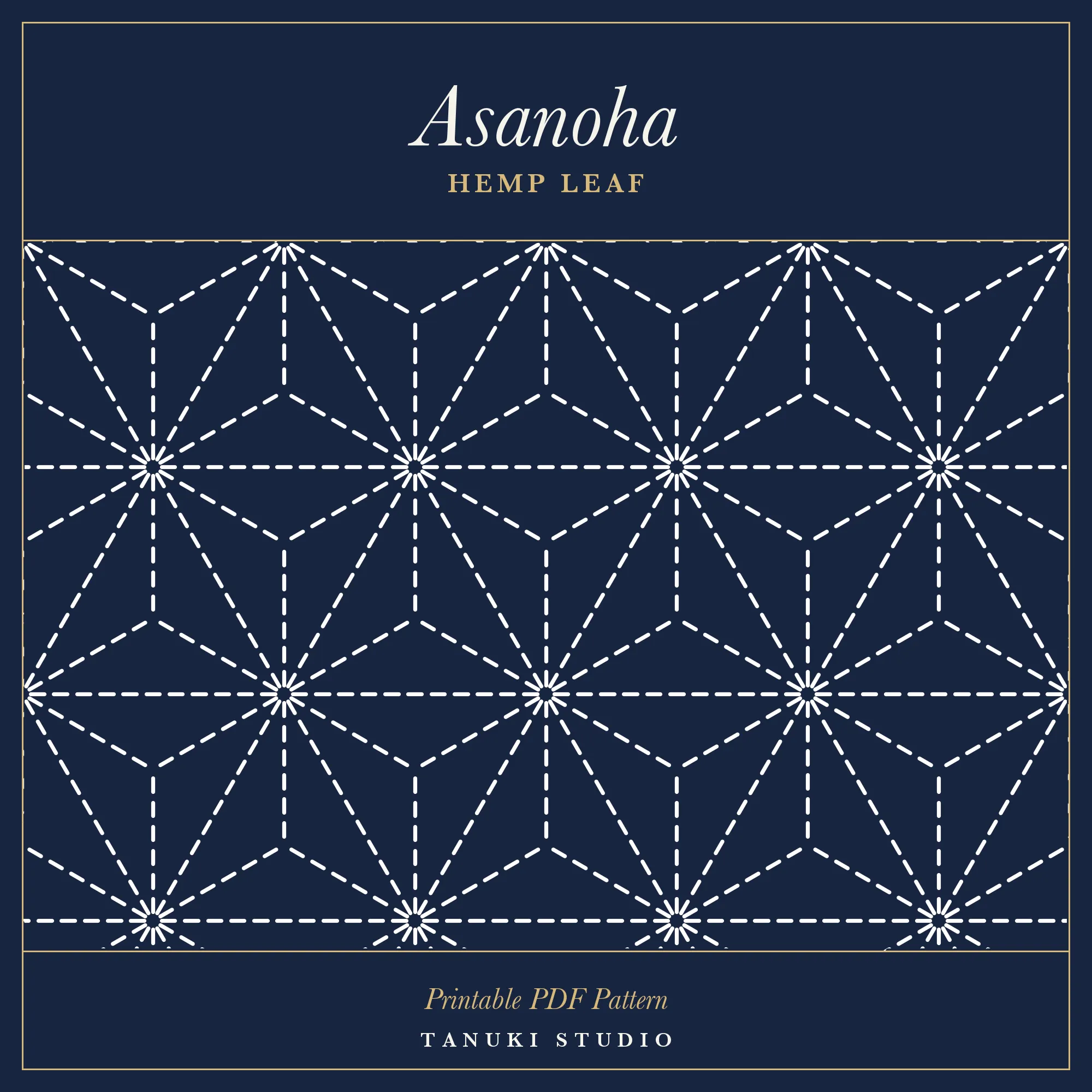
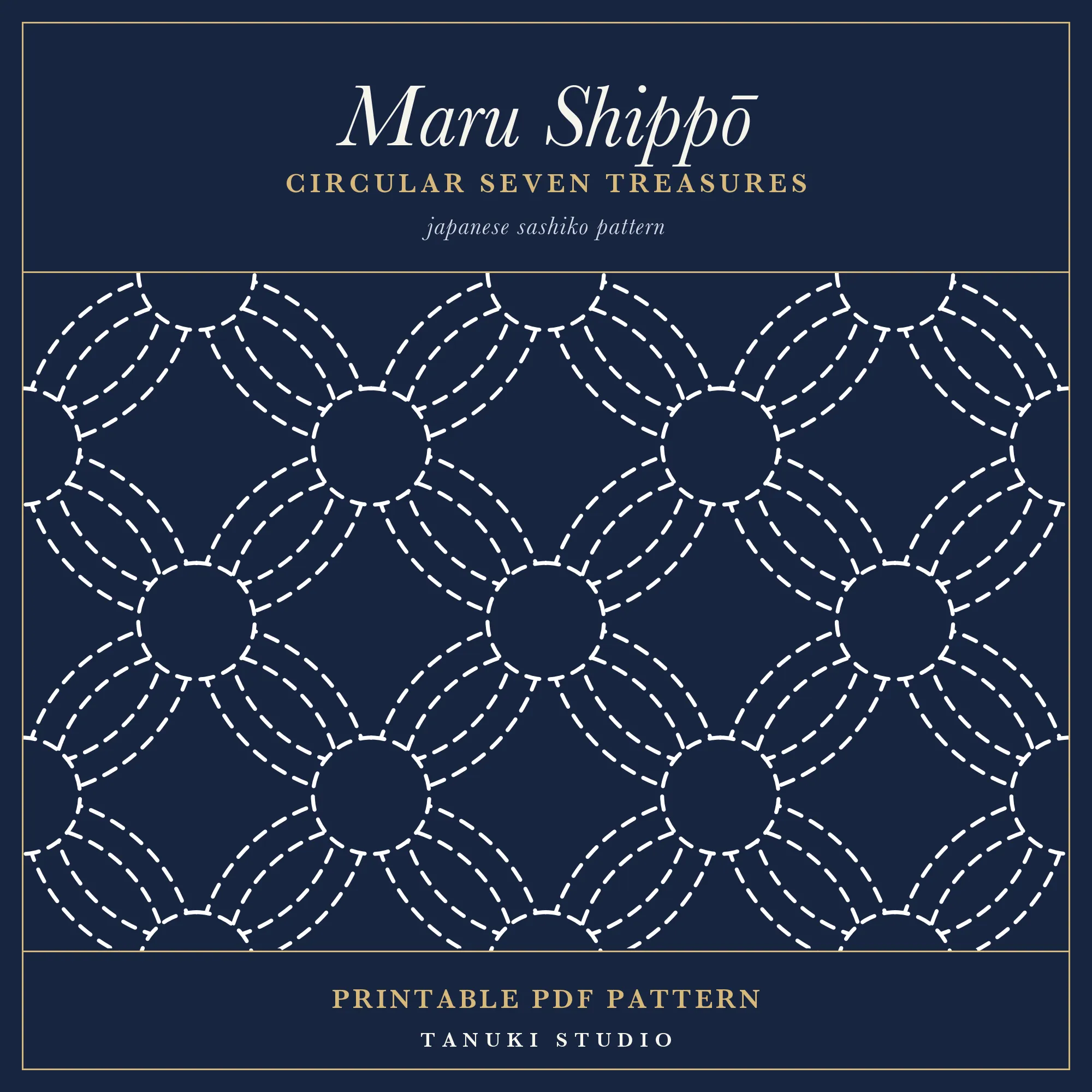
Double Basket-Weave (Nijū Kagome)
Meaning
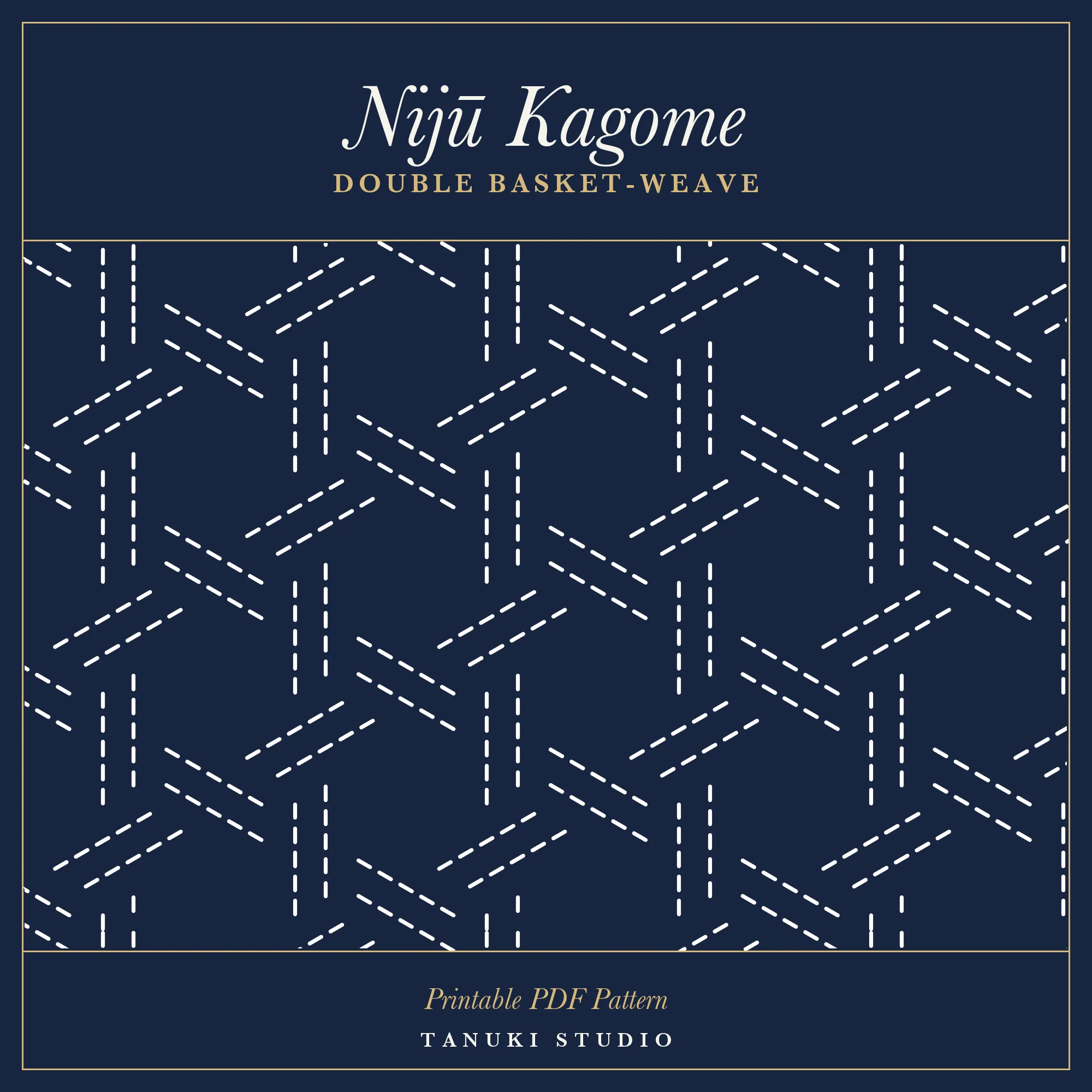
Kagome names the lattice left by a woven bamboo basket. Its crossing strips form hexagon "eyes" and six-point stars, the same shapes you see when looking through real basketwork. Nijū means double, describing this variant's paired lines.
Kagome also carries a common folk reading as a protective pattern. I keep that as folklore rather than formal history: a useful part of the motif's life, but not a fixed ritual meaning for every stitched version.
History
As a woven structural pattern, kagome is old and well documented. It was formal enough to appear as a crest for named clans during the Edo period. Its adoption into hand-stitched sashiko is part of today's teaching tradition, though the exact timing of that shift is not clear.
Nijū Kagome is usually presented as a doubled arrangement of the base kagome lattice rather than as a separate motif with its own origin story.
Stitching notes
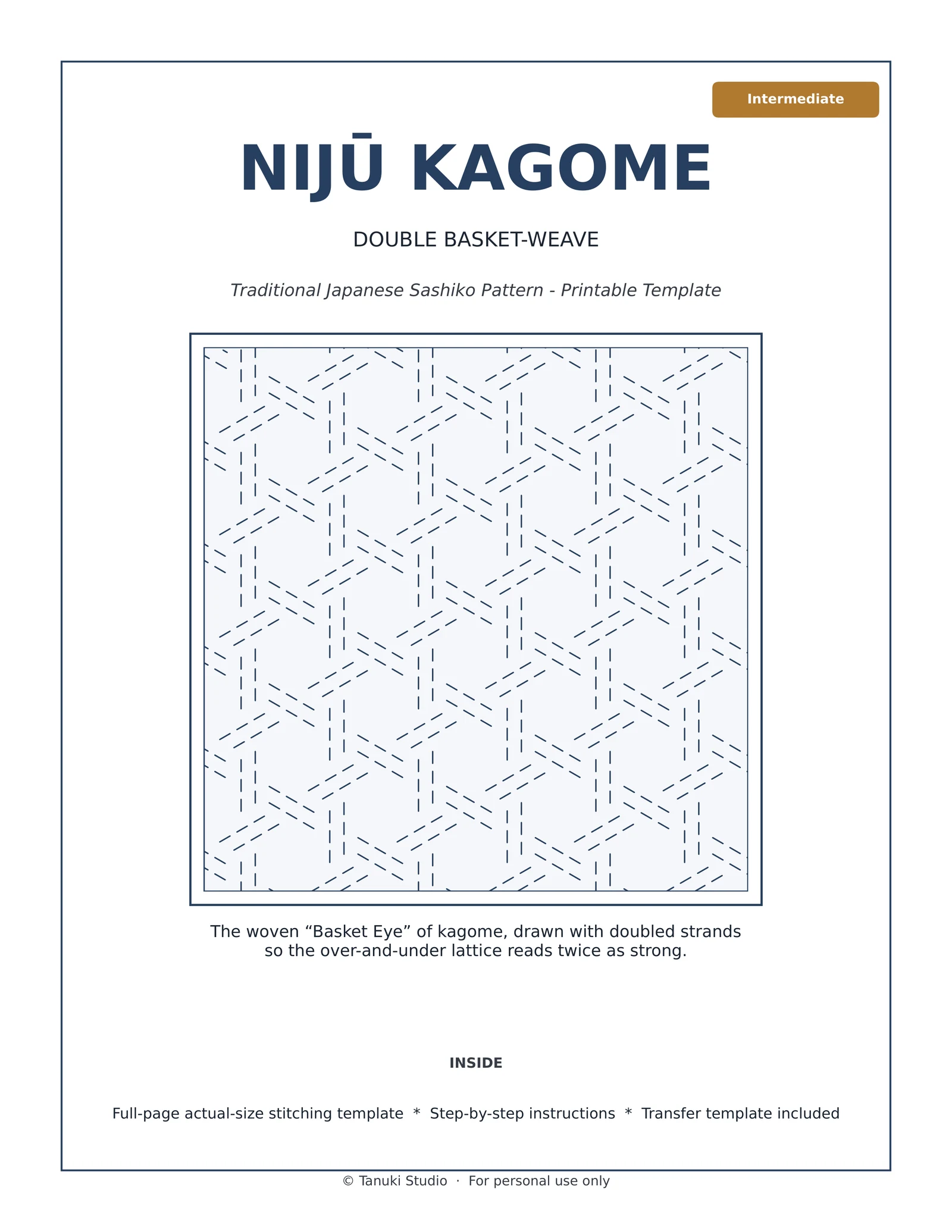
Nijū Kagome is drawn from three families of straight lines set sixty degrees apart. Every line is doubled, leaving a narrow gutter of fabric between each pair. Where the three families cross, they weave: the strand order cycles from one family to the next, so only one pair sits on top at each crossing.
That weave is where the difficulty lives. Marking the doubled, sixty-degree grid is straightforward with a ruler, but the stitching has to track which family passes over and which passes under at each crossing. Losing that order breaks the woven illusion.
Worked carefully, the reward is a convincing woven surface. Hexagon “eyes” open between the crossings, and six-point stars appear wherever the three strand families meet.
Get the full pattern on Payhip
Additional sizes, an extended stitch guide, and a grid-spacing reference sheet.
Buy on Payhip → (opens Payhip in a new tab)Secure checkout via Payhip. Pay by card or PayPal.
Three free patterns, plus 15% off
Jūjizashi, Dan Tsunagi, and Komezashi, with a plain how-to for all three.