Rising Steam (Tatewaku)
Meaning
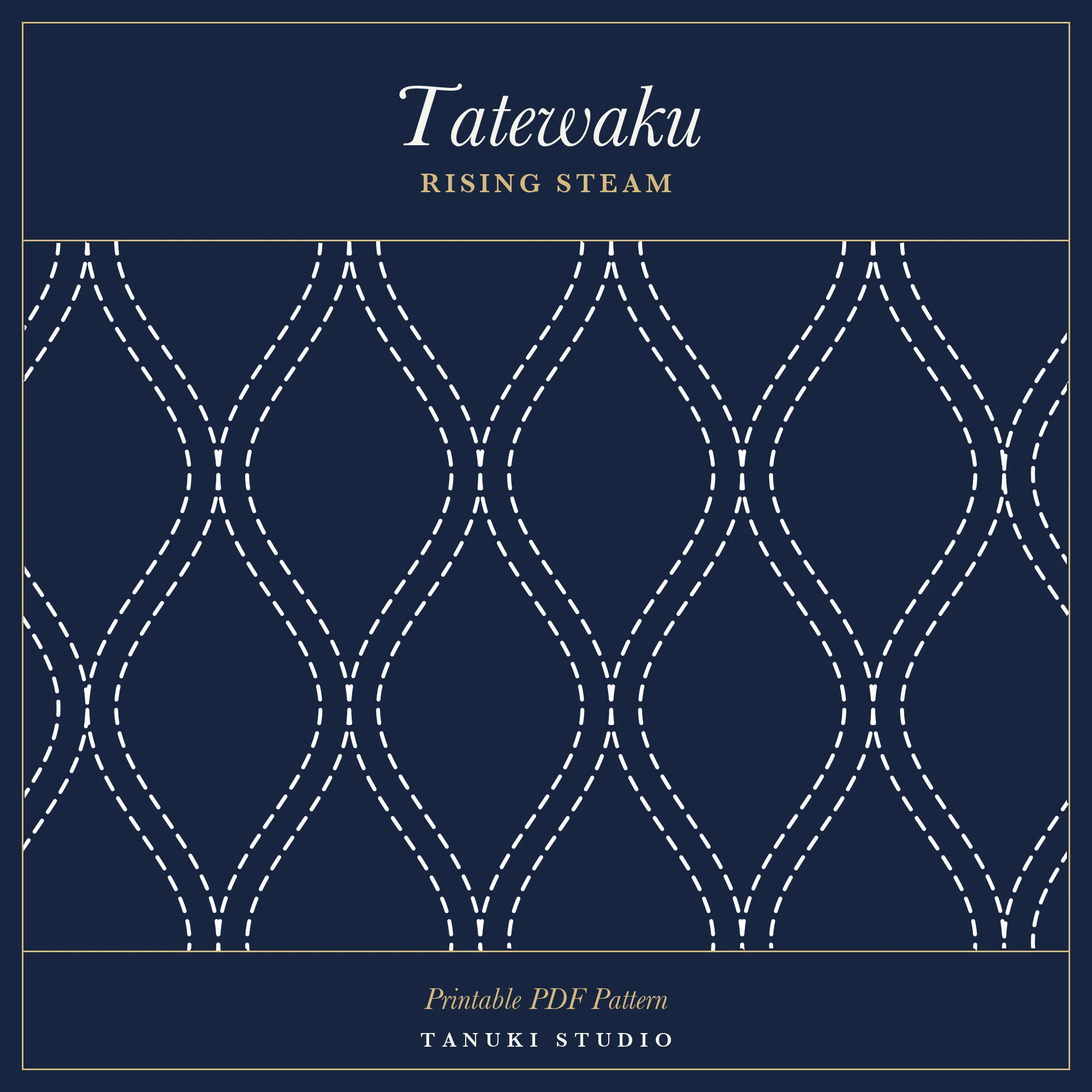
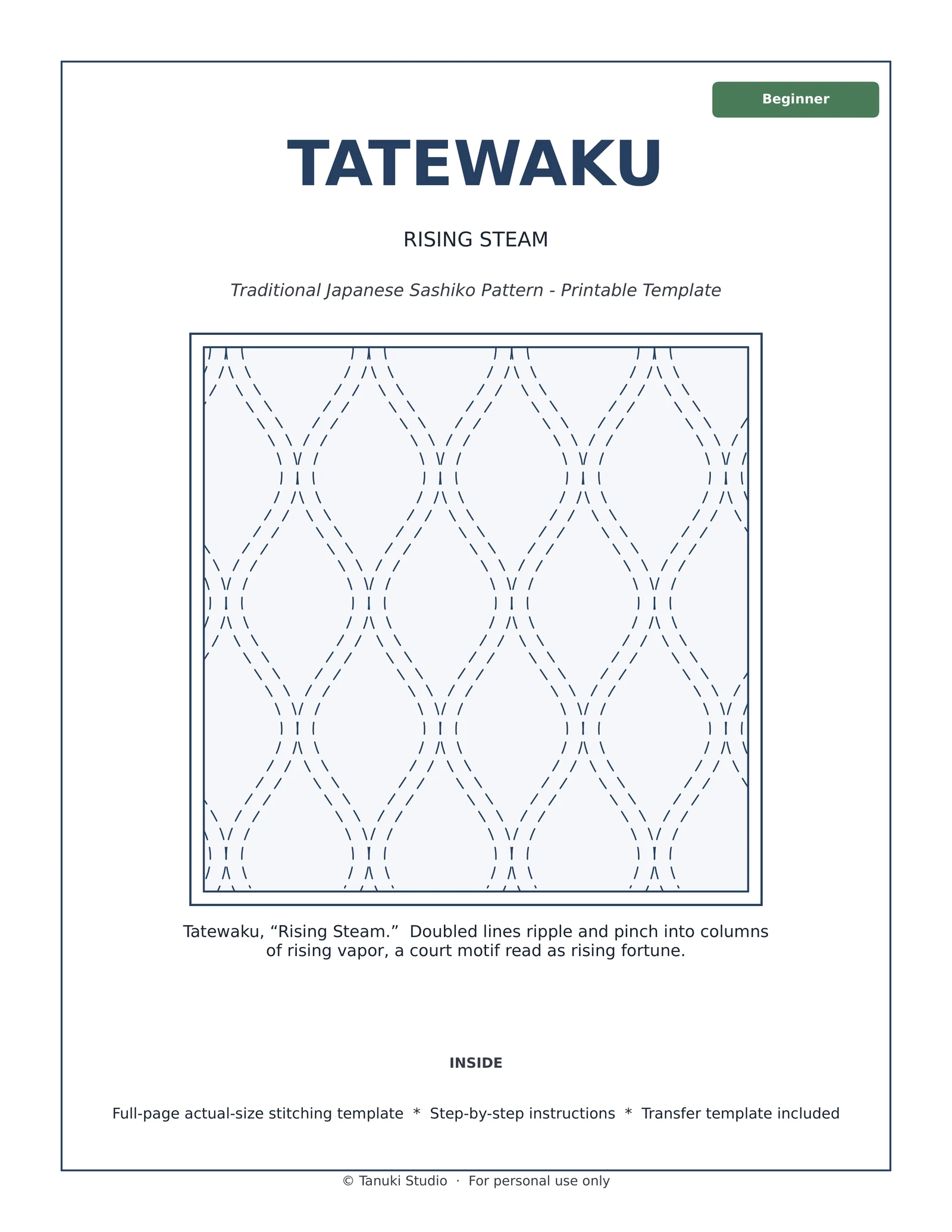
Tatewaku, literally "rising steam," pictures vapor curling upward in alternating vertical waves. It is classed among the auspicious wagara, patterns chosen for good-luck symbolism. Its rising lines are read as a wish for rising fortune: luck, status, and momentum climbing steadily upward.
Some sources also give it a gentler legend reading connected with ascent after death. I keep that as a secondary note; the main feeling of the pattern is upward movement.
History
Tatewaku has one of the clearest histories in this collection. It is recorded as a yusoku monyo, one of the patterns codified for Heian-period court nobility between 794 and 1185.
Later generations combined it with other motifs, including clouds, chrysanthemums, and waves, broadening its use beyond the court. Today it remains part of the formal kimono repertoire. Here it is adapted as a flowing moyozashi sashiko design in continuous running stitch.
Stitching notes
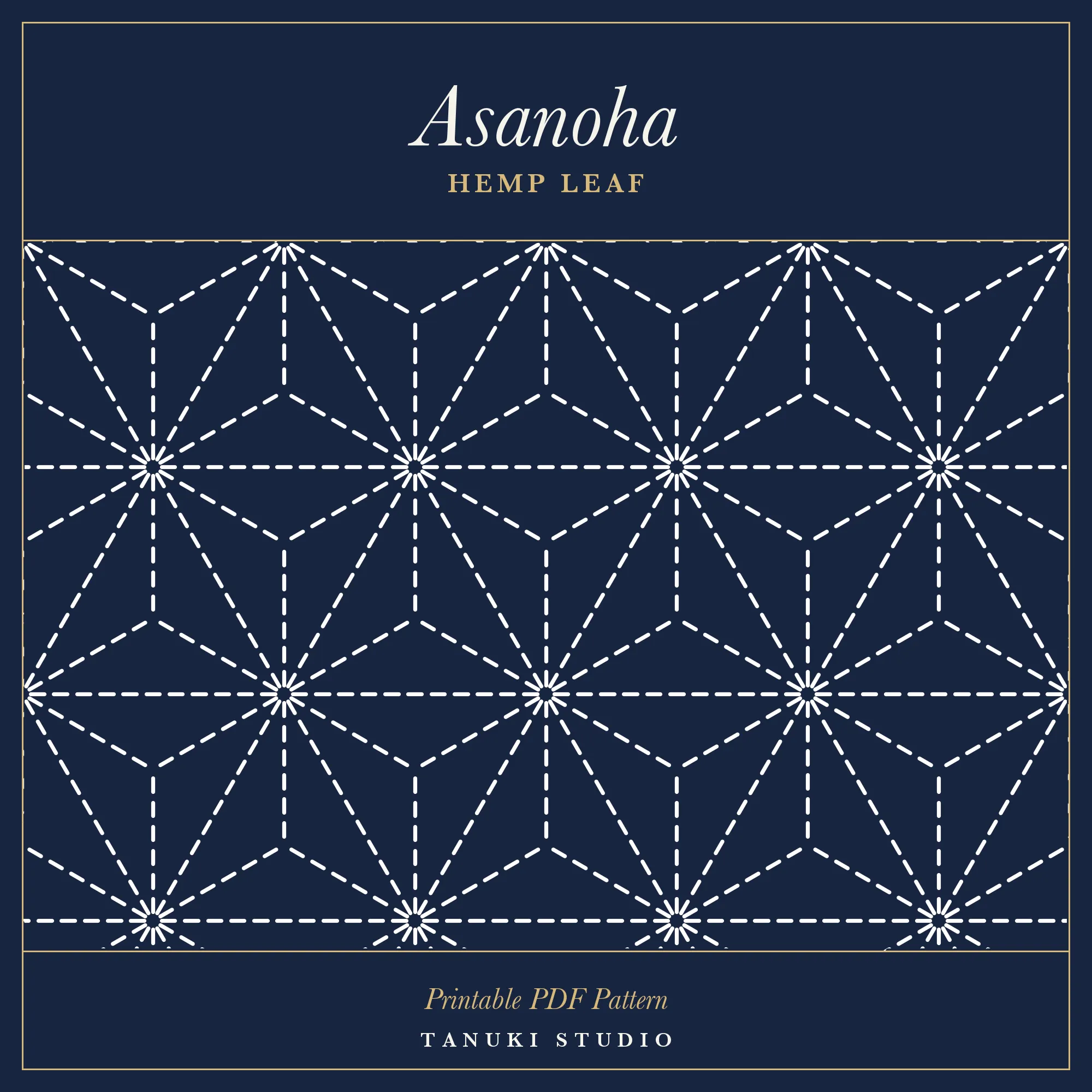
Tatewaku is drawn as vertical columns of two parallel wavy lines that swell and pinch in a steady rhythm. The columns alternate in phase, so the whole piece reads as one continuous flow instead of a stack of repeating blocks.
Each wave is stitched as a single continuous running line, top to bottom. The stitches naturally shorten through the tight pinches where the two lines pull close together.
Worked here across three shades of indigo running from pale at the edges to deep through the center, though a single color flows just as well. Because every line runs the full height of the piece in one pass, there’s no back-carrying or direction-switching to track, just a steady, unbroken up-and-down rhythm.
Get the full pattern on Payhip
Additional sizes, an extended stitch guide, and a grid-spacing reference sheet.
Buy on Payhip → (opens Payhip in a new tab)Secure checkout via Payhip. Pay by card or PayPal.
Three free patterns, plus 15% off
Jūjizashi, Dan Tsunagi, and Komezashi, with a plain how-to for all three.