Building Blocks (Tsumiki)
Meaning
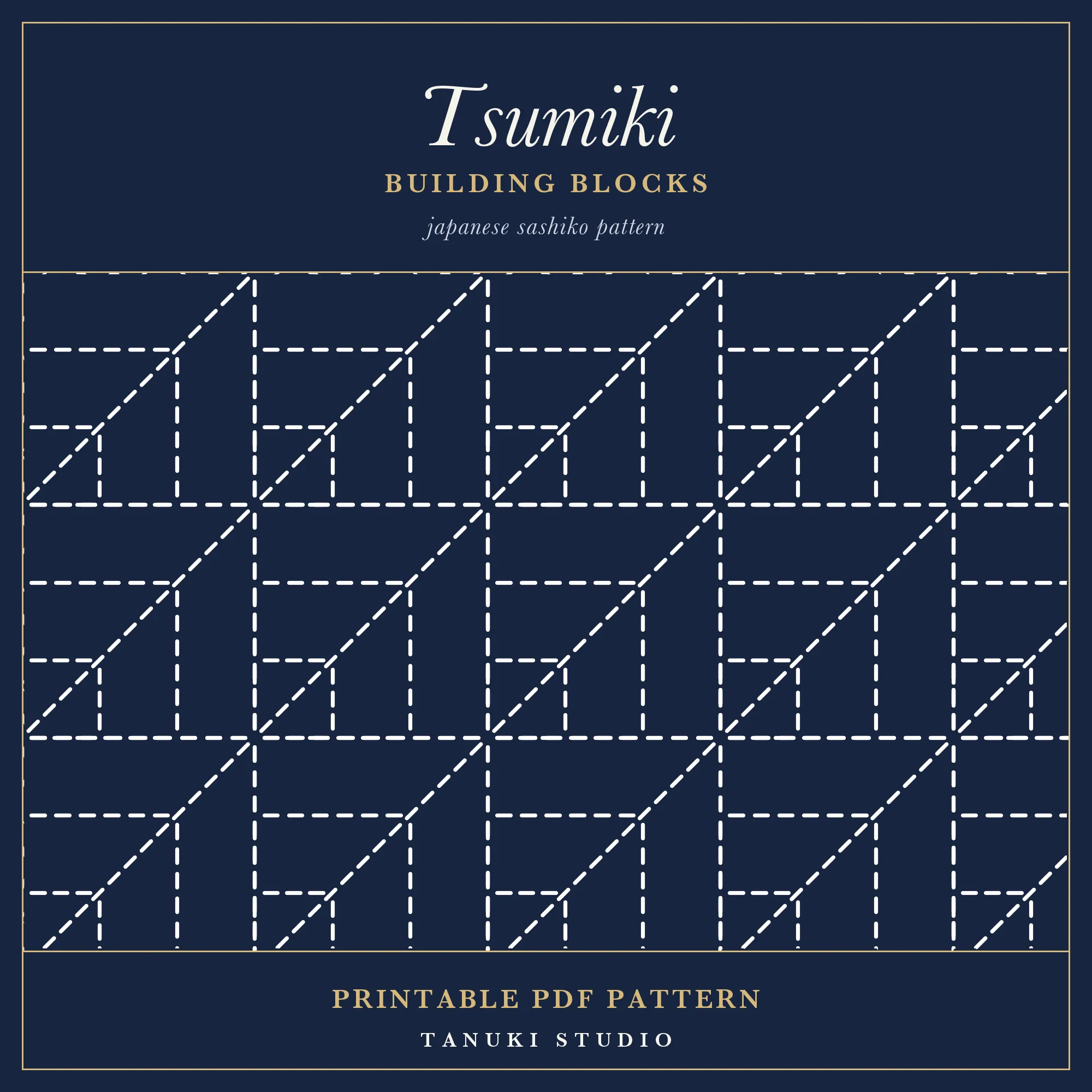
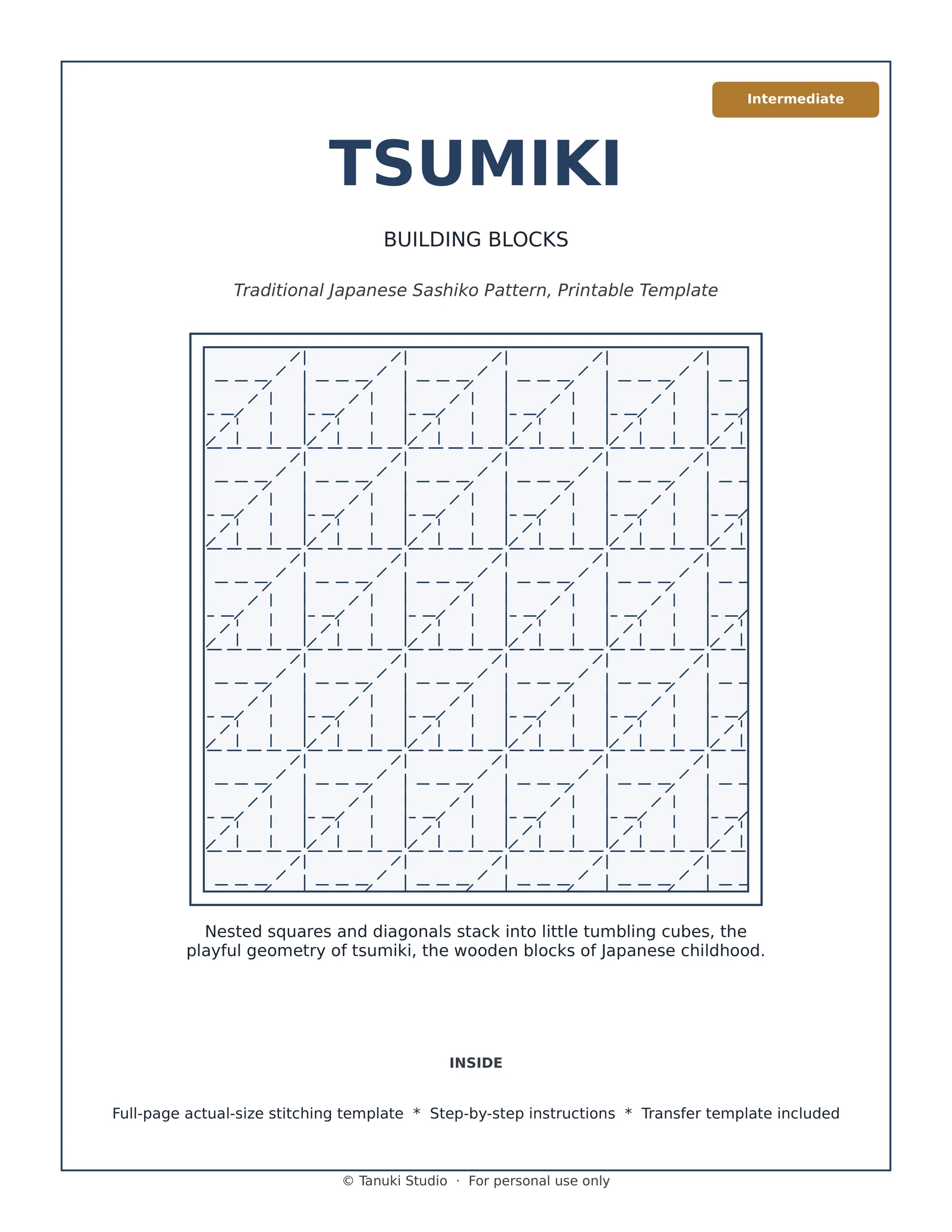
Tsumiki is the everyday Japanese word for a child's wooden building blocks. The name here is descriptive: the stitched grid of offset squares and diagonals reads as a stack of tumbling blocks, not a wish or an omen.
History
The textile sources I found point to the modern sashiko teaching world, especially sampler cloths from Daruma and Yokota, rather than to a pre-modern textile or crest tradition. The name works well as a recent, descriptive label for a grid-based sashiko variation.
Stitching notes
Tsumiki is built on a plain square lattice, with no offset between blocks, each one and a half inch cell holding three concentric corner squares set a half inch apart (at half an inch, one inch, and one and a half inches) plus a single corner-to-corner diagonal. The stitching runs in four continuous passes: the three nested squares worked one after another, then the diagonal that gives each block its sense of a stacked, three-dimensional cube.
Because every line is a straight running stitch along a marked grid, worked continuously rather than doubling back on itself, the construction is more approachable than its intermediate rating might suggest; precision in marking the lattice matters more than any tricky stitch technique.
Get the full pattern on Payhip
Additional sizes, an extended stitch guide, and a grid-spacing reference sheet.
Buy on Payhip → (opens Payhip in a new tab)Secure checkout via Payhip. Pay by card or PayPal.
Three free patterns, plus 15% off
Jūjizashi, Dan Tsunagi, and Komezashi, with a plain how-to for all three.