Sarashi is the white cotton behind many hanafukin, tenugui, and kitchen cloths. For sashiko, its appeal is practical: it is light, absorbent, easy to fold into two layers, and strong enough to take rows of running stitch.
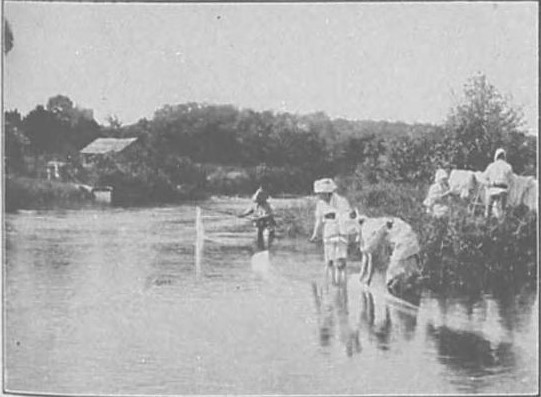
Its best-known production home is Sakai, near Osaka, where the wazarashi bleaching trade has roots going back centuries and is still active today. For the fuller story of sashiko’s Edo-period origins and the boro mending tradition, see A short history of sashiko.
Beyond sashiko, sarashi has been used for juban, infant diapers, kimono padding, iwata-obi maternity sashes, tenugui hand towels, kitchen straining cloth, and mending material. Off the roll, it feels crisp and almost papery. Washing and handling soften it quickly.
How much sarashi you need, and what it costs
A standard sarashi roll is about 34-35cm wide by 10m long, sold folded and bagged. Shorter 6m or 8m rolls turn up occasionally too.
A doubled hanafukin needs a piece roughly 34-35 x 68-71cm before folding. Once doubled and hemmed, it finishes around 32-35cm square. A 10m roll gives you about 14 hanafukin-sized pieces.
Pricing varies by retailer and grade. In Japan, a plain undyed roll often falls around ¥800 to ¥2,000. Specialty treated sarashi costs more. Outside Japan, the import markup can matter as much as the cloth itself.
What thread weight to use with sarashi
Match your thread to how dense the pattern is, not to the fabric itself. A thinner sashiko thread suits tightly packed patterns, like hitomezashi grids, where a thicker thread would crowd the stitches and pucker the cloth. Kaki no Hana, a beginner hitomezashi pattern well suited to hanafukin, is a good example.
A standard-weight thread suits bolder, more open motifs, where you want the stitch itself to read clearly.
Japanese tenugui and sarashi manufacturers grade some base cloth by weave density, from coarsest to finest: bun, tokubun, oka, and tokuoka. The names do appear on some retail listings, but most sarashi sold to home stitchers is not labeled this way.
For most home stitchers, the better test is simpler: choose cloth that feels light but not gauzy, and make sure a needle passes through without fighting.
Buying sarashi today
Outside Japan, sarashi itself is harder to find on a physical shelf. A handful of specialty online marketplaces and Japanese-fabric importers carry it by the yard or by the roll; search “sarashi” or “sarashi momen” to find it.
In Japan, sarashi is sold at general fabric and craft retailers, folded and bagged by the roll. It may sit near sterile gauze cloth, and both are bleached cotton, but they are not the same weave.
Gauze is loose and open, built for absorbency and breathability. Sarashi is a tighter plain weave, built to hold up to repeated stitching, washing, and handling.
Getting sarashi ready to stitch
Prewash and press sarashi before you mark a pattern on it. Like many new cottons, it is finished with sizing that stiffens and smooths the cloth. Washing removes that sizing, lets the cloth relax, and gets the first shrinkage out of the way before you transfer a grid.
A sarashi roll’s long edges are woven selvages, so they will not fray as you handle the cloth. The cut edges still need finishing, and the cloth is thin enough that a single layer does not hold sashiko stitching cleanly.
That is why hanafukin are doubled. Two layers give the stitches something substantial to sit in, and the raw cut edges can be folded inside before the cloth is stitched shut.
Once the fabric is prewashed and doubled, transfer the pattern onto the cloth, then stitch it. These two guides cover the next steps: how to transfer a sashiko pattern and how to stitch sashiko.
Once it is stitched, treat the finished hanafukin like a plain white cotton dish cloth. Cold or warm water is fine. Go easy on bleach; repeated heavy bleaching is harder on stitching than a normal gentle wash.
If you can’t get real sarashi: substitutes that work
Unbleached muslin and flour sack towels both work well as stand-ins; skip cheesecloth and tightly woven quilting cotton.
The closest Western equivalent is fine, lightweight, unbleached muslin, often around $4 to $6 a yard at fabric and craft stores. Reach for fine or lightweight muslin specifically. Coarse, heavy muslin can be too open or too stiff for comfortable hand stitching.
The color will be warmer than sarashi’s bright white. For most projects, that difference is not a problem.
A flour sack towel is another easy substitute, especially in the US: 100% cotton, plain-woven, light, and absorbent, and sold at grocery, kitchen, and craft stores. It is close enough to sarashi’s weight to work well for a doubled, full-coverage piece like a hanafukin.
Weight and openness vary by brand, so use the see-through test below before committing a towel to a project. See one stitched this way in the Hanazashi hanafukin project.
A doubled hanafukin needs the size covered earlier: roughly 34-35 x 68-71cm before folding. From a muslin bolt, about half a yard is plenty. A flour sack towel usually covers it with one towel; buy a slightly larger towel if you plan to prewash first, because cotton shrinks slightly on its first wash.
Sarashi is sometimes marketed abroad as “Japanese cheesecloth,” because it handles similar straining and wiping jobs in the kitchen. That is a use comparison, not a stitching recommendation.
Western cheesecloth is much looser and gauzier than sarashi. It will not hold up to repeated needle passes the way sarashi, or a good muslin substitute, will. If you can see clearly through a fabric, it is too open to stitch on.
On the other end of the spectrum, tightly woven quilting cotton has the opposite problem. The weave is dense enough that pushing a needle through it by hand takes real effort, especially through two doubled layers.
For more on choosing sashiko-friendly fabric in general, see sashiko materials & tools.
Quick reference
Fabrics that work
- Unbleached muslin (fine or lightweight only): the closest weave match, about $4-6 a yard.
- Flour sack towels: 100% cotton, about $2-4 each; one towel usually covers a hanafukin.
Fabrics to avoid
- Cheesecloth: perfect for straining dashi, but the weave’s too loose to hold sashiko stitches.
- Tightly woven quilting cotton: great for quilts, but hard on your hands through two doubled layers.
Whether it’s the real thing off a roll from Sakai or a substitute pulled from a fabric shelf closer to home, that same plain-weave practicality is what has kept sarashi, and cloth like it, in everyday use for centuries.